
Pre-Pandemic Timeline
2000 – 2015
Chronological order of significant global, Australian and SA data points leading up to the COVID-19 Pandemic.
Navigate the timeline pages:
1800s | 1900-1945 | 1946-1979 | 1980-1999 | You Are Here | 2016-2018 | 2019 | 2020 | 2021 | 2022 | 2023
Best viewed on a large screen
Data points are continuously being added so please come back again soon

Sequoia Pharmaceuticals files patents for SARS treatments
WHO endorsed NGO FIND is launched – a new era in Diagnostics (Dx) begins
On May 22, 2003 at the WHO WHA the Foundation for Innovative New Diagnostics (FIND) was created. FIND is an independent, non-profit research foundation based in Geneva, launched by the Bill & Melinda Gates Foundation (BMGF) and the UNDP/World Bank/WHO Special Programme for Research and Training in Tropical Diseases (TDR), and a Global Alliance for TB Drug Development (TB Alliance) Stakeholder. With initial funding of $30 million over 5 years by the BMGF, FIND is the only NGO dedicated solely to the development of diagnostic tests for infectious diseases. [1, 2, 3]
The creation of FIND was sold as a means to “develop better diagnostic tests for infectious diseases, with an initial emphasis on tuberculosis” as “TB is still diagnosed with century-old technology, by examining a patient’s sputum under a microscope”. The foundation’s first exccutive director was Dr. Giorgio Roscigno and Dr. Mark Perkins as the scientific director. [4]
 “[T]here is an urgent and unmet need for more accurate and cost-effective diagnostic technologies, particularly for diseases devastating the developing world.” The initiative will enable the “development and delivery of much-needed diagnostic tests for poverty-related diseases”. Innovations in biotechnology and modern science could transform both the diagnosis and treatment of diseases, especially in the world’s poorest countries.
FIND will be “governed by a board composed of public health experts, business leaders, influential scientists and patient representatives. Working with specialised agencies, academia and civil society, FIND’s non-profit status will also enable close partnerships with industry to target investment toward promising diagnostics best suited to meet public health needs.”
And so begins the new era of Diagnositics (Dx)
International Declaration on Human Genetic Data (2003)
The International Declaration on Human Genetic Data (2003) was adopted unanimously and by acclamation at the United Nations Educational, Scientific and Cultural Organization’s (UNESCO) 32nd General Conference on 16 October 2003. This document began several years before the Human Genome Project drew to an end. [1, 2]
With the rapidly developing field of genomic research and increasing speed with which to sequence genomes, many people fear that human genetic data will be used for purposes contrary to human rights and freedom. Governments, non-governmental organizations, the intellectual community and society in general are calling for guidelines at the international level.
This Declaration and the Universal Declaration on the Human Genome and Human Rights (1997) are the only international points of reference in the field of biological-ethics.
Australian Biosecuirty CRC for Emerging Infectious Disease is founded
On November 21, 2003 the University of Queensland launched the Australian Biosecurity Cooperative Research Centre (AB-CRC) for Emerging Infectious Disease following the award of a 7-year federal government grant of $60 million to a consortium. It consisted of 3 universities, 8 federal and state government agencies, 5 industry groups and 3 international organisations (Bangkok, New York and Winnipeg). [1, 2, 3, 4]
The intent is for the partners to combine their resources and expertise using the latest diagnostic, computer and satellite technologies to develop specialised early warning systems for the rapid detection and response to disease outbreaks.
The spread of new infectious diseases into Australia, through the movement of people and animals, viruses jumping from animals to humans, or even bioterrorism, is an increasing risk according to Dr Stephen Prowse the CEO
“The global SARS epidemic is a perfect example of the far-reaching impacts of newly emerging diseases” Dr Prowse said.
Experts in AB-CRC, including Dr Hume Field and Professor John Mackenzie who were involved in the global response to the SARS outbreak, under the auspices of the World Health Organization. [3]
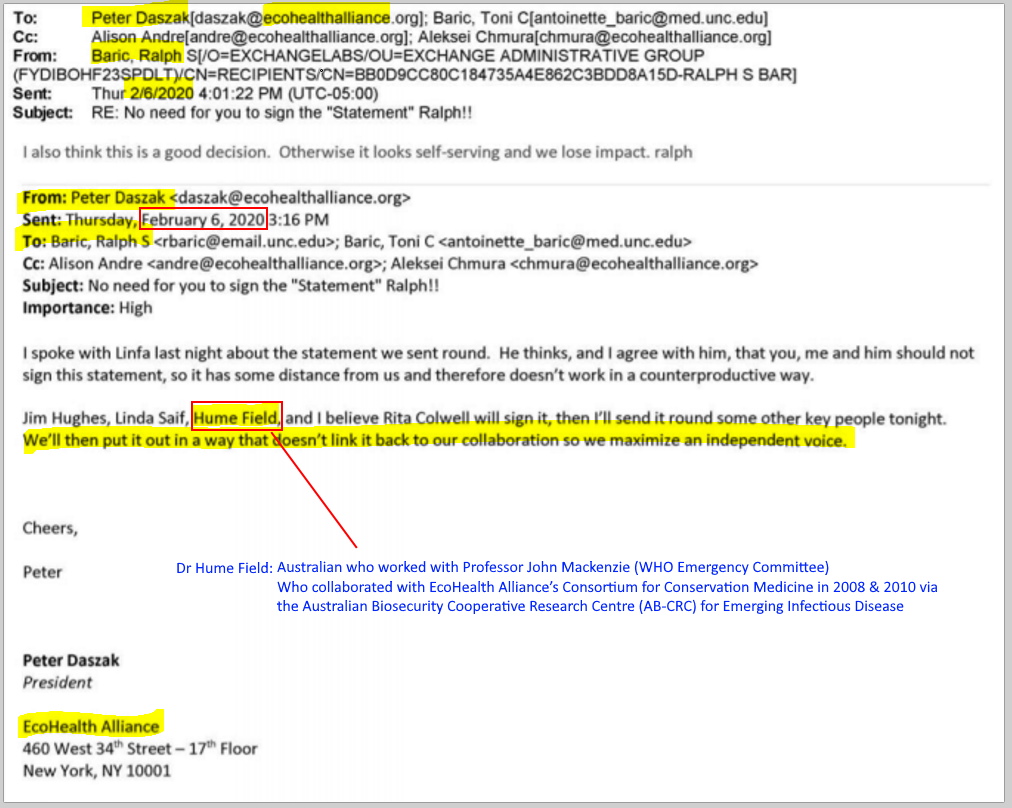
Prof Mackenzie was on the WHO Emergency Committee in 2020, and both were authors on The Lancet statement organised by Peter Daszak whom they worked closely with via the New Yorks Conservation Medicine, an arm of EcoHealth Alliance.
Australia & NZ sign treaty to establish a bi-national therapeutic product Regulator
In December 20, 2003 the Australian and New Zealand Governments signed a treaty to establish a single, bi-national agency to regulate therapeutic products, including medical devices and prescription, over-the-counter and complementary medicines, as part of “Globalisation and the way “Towards a harmonised regulatory pathway”. [2, 3, 4]
“Harmonisation of therapeutic products regulation is a relatively recent development, but there are ongoing activities at both the global and regional levels, as well as numerous formal and informal bilateral arrangements. For example, a number of states have chosen to recognise approvals by the United States FDA, either de jure, through a formal agreement, or de facto“.
“The single agency, which will replace the Australian Therapeutic Goods Administration (TGA) and the New Zealand Medicines and Medical Devices Safety Authority (Medsafe), will be accountable to both the Australian and New Zealand Governments. It is expected that the same regulation in force in Australia will also apply to New Zealand as per the amended law.” [1]
If the bi-national regulator is “implemented, the joint agency could serve as a model that would usefully inform initiatives in other jurisdictions”. On January 12, 2012 the “Australia New Zealand Therapeutic Products Agency (ANZTPA)” had their “first meeting” following June 20, 2011 agreement to proceed, and completed a “harmonisation activity”. But on November 20, 2014 the Oceania Regulator ANZTPA was officially scrapped. [5]
Harmonisation is still alive. The FDA is a founding member of International Conference on Harmonisation, on March 26, 2020 encouraged the “pharmaceutical regulatory authorities globally” to implement the ICH Guidelines to achieve International Regulatory Harmonization.
Facebook begins
Facebook was founded by Mark Zuckerberg and launched on February 4, 2004. The platform began exclusively for US college students, once the “trend” was established, they opened up the platform to the wider public, globally. This social media platform allows people around the world to voluntarily provide a wealth of their personal information including facial photos, voice and listening (microphone & camera), text, location data, habits, family and social relationships, interests and education and so much more.
Curiously the same day Facebook was launched the 2003 DARPA/Pentegon project Lifelog was shut down due to a “change in priorities”. [1, 2, 3]
Lifelog was an “ambitious effort to build a database tracking a person’s entire existence” that had referenced Microsoft’s MyLifeBits project. A government tracking it’s citizens is illegal without a warrant.
Ex-DARPA employees such as Regina Dugan went across to work for Facebook. It is heavily involved in “cutting-edge experiments and hardware” research projects. [4, 5, 6]
Facebook now has the power to surveil, track, influence and censor citizens of the world not just internally, and via granting unauthorised access to user data through “data-sharing deals“ with hundreds of external companies. Why won’t China allow Facebook?
Zuckerberg is married to his Chinese “college sweetheart”, Priscilla Chan, together they formed their influential, philanthropic Chan-Zuckerberg Foundation.
Do Big Tech companies like Facebook, Google and Twitter function as publicly acceptable fronts for domestic (illegal) spying/data collection operations?
Vaccine Safety Net project is launched
The World Health Organisation (WHO) Vaccine Safety Net Project (VSN) officially launched in August 31, 2004 and was communicated to the media on May 10, 2005. The aim to improve global dissemination, via the internet [6], of information on vaccine safety that adheres to good information practices – linking to trusted sources of vaccine information. The Global Advisory Committee on Vaccine Safety (GACVS) [1] who “was constituted by WHO in September 1999″, to respond promptly, efficiently, and with scientific rigour to vaccine safety issues of potential global importance,” [2] this committee determines who is a good source of vaccine info. [3]
The Vaccine Safety Net is a global network of websites, evaluated by the WHO advisory committee, that provide reliable information on vaccine safety”. WHO evaluates the electronic resources (websites) for their adherence to the criteria of credibility, content, accessibility and design. [4]
The trusted websites included private, non-profits like Immunization Action Coalition (IAC) [5] who is affiliated with Bill Gates’ Children’s Vaccine Program (CVP) who together are the Allied Vaccine Group (AVG).
Symposium sets the One World, One Health concept for disease prevention
Health experts from around the world met on September 29, 2004 for a symposium focused on the current and potential movements of diseases among human, domestic animal, and wildlife populations organized by the Wildlife Conservation Society and hosted by The Rockefeller University in New York City. The symposium called “One World, One Health: Building Interdisciplinary Bridges to Health in a Globalized World”.
The symposium set 12 priorities to combat health threats to human and animal health. These priorities, known as the “Manhattan Principles,” called for an international, interdisciplinary approach to prevent disease and formed the basis of the “One Health, One World™” concept.
Recent outbreaks of West Nile Virus, Ebola Hemorrhagic Fever, SARS, Monkeypox, Mad Cow Disease and Avian Influenza remind us that human and animal health are intimately connected.
A broader understanding of health and disease demands a unity of approach achievable only through a consilience of human, domestic animal and wildlife health – One Health.
We are in an era of “One World, One Health” and we must devise adaptive, forward-looking and multidisciplinary solutions to the challenges that undoubtedly lie ahead.
WCS: One World, One Health Symposium
On September 29, 2004 a “One World, One Health” symposium organized by the Wildlife Conservation Society (WCS) [3, 4] was held at The Rockefeller University, and was followed by many other workshops, to bring into plan One Health.
Health experts “focused on the current and potential movements of diseases among human, domestic animal, and wildlife populations.” They state “A broader understanding of health and disease demands a unity of approach achievable only through a consilience of human, domestic animal and wildlife health” what they call One Health. [1]
“Phenomena such as species loss, habitat degradation, pollution, invasive alien species, and global climate change are fundamentally altering life on our planet from terrestrial wilderness and ocean depths to the most densely populated cities. The rise of emerging and resurging infectious diseases threatens not only humans (and their food supplies and economies), but also the fauna and flora comprising the critically needed biodiversity that supports the living infrastructure of our world”
William H. Foege, a Fellow at the Bill & Melinda Gates Foundation gave the Keynote Speech: “One World, One Health, Could We Muddle Through?” and Dr. Steven Sanderson, a Political Scientist [7] who was President & Chief Executive Officer of the Wildlife Conservation Society in Bronx, NY, Introduced the Manhattan Principles on “One World, One Health” written by Robert A. Cook, William B. Karesh, and Steven A. Osofsky. [2]
The Manhattan Principles “lists 12 recommendations (see below) for establishing a more holistic approach to preventing epidemic / epizootic disease and for maintaining ecosystem integrity for the benefit of humans, their domesticated animals, and the foundational biodiversity that supports us all.” [6]
- Dr Karesh became Executive VP for Health and Policy for EcoHealth Alliance and the WHO’s IHR roster (in case of a public health emergency) as well CFR and other influential organisations and is quoted as coining the term “One Health” in 2003.
- Dr Osofsky launched and managed some of the first major applied One Health global programs, [5] which WCS expressed as an “exciting societal ‘tipping point’ toward ‘One Health’ thinking” – the One World, One Health™ approach.
Dr Fauci acknowledges the superiority of natural acquired immunity
On October 11, 2004 while speaking with the Washington Journal, Dr Anthony Fauci acknowledges naturally acquired immunity through getting infected is superior relative to vaccine-acquired immunity, to the respiratory virus influenza.
“”It’s the most potent vaccination, is getting infected youreslf““
says Dr Fauci
Natural immunity has been known “since the Athenian plague in 430 B.C”.
International Finance Facility for Immunisation (IFFIm) begins
In November 2004 the United Kingdom treasury and France announce their commitment to launch an International Finance Facility for Immunisation (IFFIm) – a pilot that would apply the principles of the broader IFF on a smaller scale to the immunisation sector. The International Finance Facility (IFF) starting January 2003, was inspired to provide development assistance funds for the United Nations 2015 Millennium Development Goals (MDG) to end global poverty. [1]
In his speech in May 2005 addressing the World Health Assembly, Bill Gates mentioned the International Financing Facility for Immunizations which was “[p]roposed by the United Kingdom, with support pledged by France, Germany, Sweden, and Italy.” Gates went on to say that “this initiative would provide developing countries with the reliable funding they need, year after year, to buy vaccines, which gives the private sector the market incentive to make them and deliver them. Market forces will work for poor people only if governments put up the funds to create a market.”
IFFIm is a international development institution and vital component of GAVI’s capital structure. The IFFIm is designed to accelerate the availability of funds to be used for health and immunisation programmes through the GAVI Alliance (GAVI) in 70 of the poorest countries around the world. The IFFIm is ran by the World Bank [2, 3, 4]
In November 7, 2006 the IFFIm launch their inaugural Vaccine Bonds, their means for raising capital and being able to provide consistent and predictable finance for GAVI to fund their vaccine programs. [1]
SARS spike protein vaccine in ferrets warns “extra caution” if trialled in humans
In a paper published November 15, 2004, ferrets were vaccinated with an experimental vaccine of recombinant modified vaccinia virus Ankara (rMVA) (a cowpox virus vector) which expressed the SARS-CoV spike (S) protein – the target antigen. Upon challenge, 14 days after booster dose, the vaccinated ferrets “developed a more rapid and vigorous neutralizing antibody response” (in 3 days) compared to the unvaccinated, first time exposed to SARS-CoV virus, control animals who took 7 days to develop neutralizing antibodies.
Vaccine manufactures consider antibody titres, that is the measure of an immune response, to be “an essential feature” for determining an effective prophylactic vaccine or “protection potential” – generating antibodies is a measure of vaccine “protection” or “efficacy”. However is it really? When challenged with SARS-CoV virus via intranasal route, the vaccinated ferrets exhibited a “strong inflammatory response” in their liver causing “severe hepatitis”, which was noted as “mild” in the unvaccinated animals.
The paper notes:
- “It is known that neutralizing antibodies induced by the S protein of feline infectious peritonitis virus (also a coronavirus) often lead to accelerated infection by the mechanism of antibody-dependent enhancement of virus infectivity”
- The “neutralizing activity [IgG] was detected in sera collected from all three ferrets 7 days after booster immunization [2nd dose] with rMVA-S virus, while the titre declined to undetectable level 14 days after the booster.”!
- The “memory immune response, …is difficult to evaluate in mice”, which is why they chose ferrets.
- Replication of SARS-CoV in ferrets, lasted up to 22 days after challenge infection – thus the vaccine didn’t stop transmission potential!
- “Coronavirus S is the major antigenic protein responsible for inducing neutralizing antibody response”
- “Extra caution should be taken in proposed human trials of SARS vaccines“
- They never re-challenged the control group (now naturally immune ferrets), to investigate whether “severe hepititis” would also occur following infection.
NIH begin new SARS DNA vaccine trial
On December 13, 2004 the first U.S. SARS vaccine trial began at NIH, tested in 10 healthy volunteers to be followed up for 32 weeks (appox. 8 months) [1]
Stated in a press release ““The Vaccine Research Center, a cutting-edge facility established here at NIH just five years ago, encompasses the entire spectrum of vaccine development from basic research to clinical testing,” says NIH Director Elias A. Zerhouni, M.D. “This is why our team at NIAID has been able to develop this vaccine at an unprecedented pace, using technological discoveries that were not available just a few short years ago.”
Dr Anthony Fauci stated: “Instead of using weakened or inactivated virus, which is typical for vaccine development, the new vaccine is composed of a small circular piece of DNA [plasmids] that encodes the viral spike protein. Scientists modified the DNA to minimize the risk of it combining with the SARS virus or other viruses of the SARS type, called coronaviruses….Scientists expect that the DNA will direct human cells to produce proteins very similar to the SARS spike protein. The immune system should recognize these proteins as foreign and then mount a defense against them. If the vaccinated person ever encounters the actual SARS virus, his or her immune system will be primed to neutralize it.”
By April 2003, NIAID-funded researchers in Hong Kong were the first to show that SARS is a viral disease. They soon proved that a newly emerging coronavirus causes SARS. By May, an international collaboration of researchers had decoded the genetic sequence of the SARS coronavirus, opening many avenues of research to develop diagnostic tests, therapies and vaccines.“
A Decade of Education for Sustainable Development (2005-2014)
Starting 2005 the United Nations began their Decade of Education for Sustainable Development (DESD) aiming “at integrating the principles and practices of sustainable development [Agenda 21] into all aspects of education and learning, to encourage changes in knowledge, values and attitudes with the vision of enabling a more sustainable and just society for all.” [1, 2, 3]
UNESCO’s Global Action Programme (GAP) was launched at the World Conference on Education for Sustainable Development (ESD) in November 2014 in Aichi-Nagoya, Japan. It focuses on generating and scaling up ESD action at all levels and in all areas of education, and in all sustainable development sectors. [4]
If we can shape the minds of children it will be easier to implement the Sustainable Development goals!
Atlantic Storm – smallpox bioterrorist simulation
Atlantic Storm, a bioterrorism “table-top” simulation based on a scenario 0f a smallpox outbreak, was convened on January 14, 2005 and organized by the Center for Biosecurity of the University of Pittsburgh Medical Center (UPMC), the Center for Transatlantic Relations of the Johns Hopkins University (JHU), and the Transatlantic Biosecurity Network.
The event was sponsored by the Alfred P. Sloan Foundation, the German Marshall Fund of the United States, and the Nuclear Threat Initiative. [1, 2, 3]
The Real ID Act of 2005 – the prelude to digital ID and vaccine cards
On the back of 9/11, on January 26, 2005 the US government introduce the federal Real ID Act of 2005 (HR 418), which is passed into law later that year “essentially standardized ID requirements for all states” or centralising control! The legislation is implemented by the Department of Homeland Security. [1, 2]
By January 2019 it is recognised this centralised/standardised ID system is an international reaching program, with control repercussions for everyone. Making it impossible to work, make a living, travel without their ID! [@1:05:45]
Argentina added a “vaccination card” [@52min] to their drivers licence in December 2018, which happened to be the country where Pfizer concentrated their COVID-19 vaccine phase III clinical trial – coincidence? [3]
WHO International Health Regulations (2005) signed
At 58th World Heath Assembly (WHA) on May 23, 2005, 194 Member States adopted a new set of International Health Regulations (2005) (IHR) to manage a Public Health Emergency of International Concern (PHEIC). The IHR are a “key global instrument for protection against the international spread of disease.” This is a legally-binding instrument of international law for member states which came into force June 15, 2007. [1, 2, 5]
Which this regulatory update the term Public Health Emergency of International Concern (PHEIC) and what constitutes it’s determination is found in Article 12.
When a PHEIC is declared by the WHO Director-General, as advised by an his/her self appointed Emergency Committee, the Member States are obliged (under international law) to follow the Directions of the WHO Director General. Also note, the WHO Director General consults with the Member State before an Emergency Committee is convened.
Under the IHR, Australia, as a Member State who’s signed the agreement, is now legally obliged to follow directives given by WHO Director-General. It is important to note that declaring a “pandemic” has no international response power!
History: “In 1948, the WHO constitution came into force and in May 1951 WHO Member States adopted the International Sanitary Regulations (ISR), which were renamed the International Health Regulations in 1969 [3]. The regulations were modified in 1973 and 1981. IHR were originally intended to help monitor and control six serious infectious diseases: cholera, plague, yellow fever, smallpox, relapsing fever and typhus which were reported in the WHO Weekly Epidemiological Record (WER). Today, only cholera, plague and yellow fever are notifiable diseases.” [4]
CCP known to have an “offensive biological weapons program”
The US State Department released a report dated August 2005 titled “Adherence to and compliance with arms control, nonproliferation and diarmamament agreements and commitments”
The report examined the compliance of China, Cuba, Iran, Iraq, Libya, North Korea, Russia (and the former Soviet Union) and Syria to the United Nations 1972 Biological Weapons Convention (BWC).
They determined that “communist China maintained an offensive biological weapons program in violation of its treaty commitments and that it was run in part by an arm of the People’s Liberation Army (PLA) Academy of Military Medical Sciences (AMMS). That report specifically cited the AMMS’ Fifth Institute as the epicenter of the country’s bioweapons program.”
From 2015, a “decade later, multiple medical publications emerged from China that linked the AMMS to research at the Wuhan Institute of Virology”. The same lab that received grant funding from Dr Fauci’s NIAID. [1, 2]
It was reported that a “2015 book in which China scientists tied to both AMMS and the Wuhan lab declared that coronaviruses were the leading edge of a new era of genetic weapons warfare”…”The central premise of the AMMS book is that SARS-CoV-1, the strain of coronavirus that caused the 2002 SARS outbreak, did not emerge naturally but was a chimeric virus artificially engineered as a genetic weapon to infect humans.”! [3]
Chloroquine shows strong antiviral properties in SARS-CoV in-vitro study
Virology Journal is the official publication of the National Institute of Health which is headed by Dr Anthony Fauci.
In August 2005 the authors of a paper, that was sponsored by NIH, reported from their in vitro studies in primate cells that “chloroquine has strong antiviral effects on SARS-CoV infection” and that “these inhibitory effects are observed when the cells are treated with the drug either before or after exposure to the virus, suggesting both prophylactic and therapeutic advantage.”
Chloroquine or Hydroxychloroquine (HCQ), it’s milder form, should have been potential study candidates to prevent and treat SARS-CoV-2 from the beginning of the pandemic. This study suggests early timing is key.
Studies by official agencies, designed experiments to use the drug late – in hospital settings, and demonstrated this timing to be ineffective – no surprise there. Which is contrary to how frontline doctors used it in the very early stages of virual infection and they reported great success.
Why did officials push vaccines from the beginning when science held this information, albeit anecdotal, but important?
The authors stated that “concentrations of 10 uM completely abolished SARS-CoV infection. What other viruses could this cheap, off-patent drug work against, and what effect would that have on the pharmaceutical market?
Study: RNA shown to evade the innate immune system if altered to pseudouridine
In August 2005 Dr’s Weissman and Kariko published a paper showing a way for foreign mRNA to evade the body’s immune system, which became a “scientific milestone” that was key to the advancement of the mRNA vaccines in 2020″. This codon-optimisation technique allows the mRNA to last longer.
By modifying the RNA code (replacing the nucleoside uradine with pseudouradine [Ψ] a synthetic uradine), a foreign RNA is able to bypass the immune systems first line of defense: the innate immune system. It does this by “turning-off ” the Toll-like receptors (TLR) – the body’s natural warning system! Without this change the “vaccine” RNA would get broken down before the hijacked cells of the body would have a chance to make the foreign protein which a then-immune-antibody response would be wanted.
“Toll-like receptors are important components in defence against infection and downstream effects may also include inhibition of CD8 T cell response. CD8 is a vital part of the immune system’s ability to eradicate infection and cancer.” [2]
In 2016 the effects of Ψ were still largely unknown!
By 2020 it is simply “assumed” that the RNA will be “transient” like natural mRNA, but an “off-switch” is unknown for the modified vaccine mRNA as explained by Geneticist Professor Alexandra Henrion-Caude. [1]
In September 2021 Weissman and Kariko won the 2021 Lasker Clinical Medical Research Award for this 2005 work developing this messenger RNA technology, but missed out on the Nobel Prize.
US: Countermeasures Injury Compensation Program (CICP)
“Countermeasures Injury Compensation Program (CICP) arose as part of the December 30, 2005 Public Readiness and Emergency Preparedness Act (PREP Act), and “was pushed through to shield drug companies from lawsuits over products like the anthrax and smallpox vaccines, which had a relatively high rate of dangerous side effects.” [1, 2]
CICP “has just four employees and few hallmarks of an ordinary court. Decisions are made in secret by government officials, claimants can’t appeal to a judge and payments in most death cases are capped at $370,376.” – this court was “created by a 2005 law specifically to deal with vaccines developed under emergency authorization.” [3, 4, 5, 6]
The term “social distancing” is first coined
On February 12, 2006 the phrase “social distancing” was first coined in a New York times article:
If the avian flu goes pandemic while Tamiflu and vaccines are still in short supply, experts say, the only protection most Americans will have is “social distancing,” which is the new politically correct way of saying “quarantine.”
But distancing also encompasses less drastic measures, like wearing face masks, staying out of elevators — and the [elbow] bump.
The “highly contagious” (spreads easily) H5N1 avian flu of 2005-06, went away “without the imposition of totalitarian controls that the U.S. president sought at the time.” The Bush government produced a national strategy pandemic report in November 2005, the proposed “plans were never deployed. At the time, not many people took the thing that seriously. There were tests and a vaccine available, though not widely used. In 2005, 98 people died globally, and another 115 the following year.” [1]
Twitter begins
On March 21, 2006 Jack Dorsey, an engineer at Odeo, sent the first-ever tweet from @Jack (“just setting up my twttr”). Four month later on July 15, 2006 the San Francisco-based podcasting company Odeo officially released Twttr to the public, and within 6 months changes it’s name to Twitter. [1, 2]
Twitter was founded by Evan Williams, Jack Dorsey, Noah Glass, Biz Stone. It began as a short messaging service (SMS) for groups, starting with a founder-imposed 140-character limit, which later extended to 280 characters. [3]
In March 2007 the platform used the South by Southwest convention in Texas to “catapult itself into the limelight”, at that time “more than 60,000 tweets were sent per day”. [4]
In September 13, 2013 Twitter tweeted, that they had filed with the SEC to go public, and on November 7, 2013 they officially became a publicly traded company opening at $45.10/share, a value of $31 billion with around 200 million users.
Twitter’s “prominence rose” with the election campaign of President Donald Trump in 2016, he used the platform to get messages to the people which the “fake news” media and “fact checkers” refused to cover without bias. [9, 10, 11] On January 8, 2021 Twitter decided to permanent suspend President Trump’s official account claiming he incited violence.
At the beginning of 2016 Twitter employed 3,900 people and the platform has 500 million tweets sent each day [5], with 310 million users, the user base grew to 330 million by 2018 end [6]. In Q1 2019, Twitter changed its account reporting method to ‘Monetizable Daily Active Users’ (mDAUs). [8]
By year end 2019 the platform had 152 million mDAUs and 2021 yr end 217 million. In 2021 391 million accounts have no followers at all! [7] The “platform hit its peak in Q1 2018 when it clocked in 336 million monthly active users” and declined there after, allegedly due to removing bot accounts.
On October 27, 2022 Elon Musk buys out all of Twitter for $54.20 per share, a takeover that was announced on April 25, 2022. Musk’s objective to make Twitter the “common digital town square” and bring back free speech.
Origin of “Lockdown” – a school project
At a May 1, 2006, Science and Engineering fair in Indianapolis, 15 year old Laura Glass’ science project laid the plan for 2020 social distancing and lockdowns. [1, 2, 6] Maybe Laura was inspired by the New York Times article earlier that year which mentioned “social distancing“?
Laura’s father, Dr Robert Glass, “a senior scientist at Sandia in New Mexico who specialized in building advanced models to explain how complex systems work” [3] explored the separation and closure concept further and the paper “Targeted Social Distancing Designs for Pandemic Influenza” was published by the CDC in November 2006.
This concept flowed through Bush administration “federal bureaucracy in 2006 and 2007, it was viewed as impractical, unnecessary and politically infeasible.” But by February 2007, the CDC wrote the Non-Pharmaceutical Interventions (NPIs) policy for pandemic influenza mitigation, which included “social distancing” and “stay at home” and closure of schools. [4]
Disease mitigation was challenged by Johns Hopkins academics in 2006. [5]
Patent filed for modified mRNA using pseudouridine
On August 21, 2006 the University of Pennsylvania (UPenn) filed a patent titled “RNA containing modified nucleosides and methods of use thereof“, on behalf of the two “inventors” Katalin Kariko and Drew Weissman. On October 2, 2012 the patent application was granted.
The patent is, in part, for the used of “pseudouridine” in create a synthetic mRNA code, which help’s the mRNA evade immune detection and last longer than natural mRNA
In 2007, the companies mRNA RiboTherapeutics Inc. and CellScript LLC. were established, both connected to Gary Dahl, the director and CEO respectively. mRNA RiboTherapeutics has an exclusive license to the patent from the Trustees of the University of Pennsylvania. That patent was then sublicensed to CellScript. [2, 3, 4, 5]
In 2017, CellScript signed a “Patent Sublicense Agreement” with Moderna on Jun 26, 2017 and the next month mRNA RiboTherapeutics signed one on July 14, 2017 with BioNTech.
CellScript, who supplies the modified mRNA [with minimal safety data], went from $7.4M in revenue in 2019 to just under $50M in 2020. Moderna was to pay “a non-refundable, non-creditable sublicense fee of twenty-two million U.S. dollars ($22,000,000)” by an undisclosed date in 2019, though BioNTech’s fees & royalties are not disclosed.
US establishes BARDA for advanced pandemic countermeasure development
On September 27, 2006 the US House passed the Biodefense and Pandemic Vaccine and Drug Development Act of 2006 (H. R. 5533) which established the Biomedical Advanced Research and Development Authority (BARDA) within in the Department of Health and Human Services (HHS). BARDA was set up to develop advanced countermeasures to pandemic viruses and defenses against biological attacks, and build on Project BioSheild. [1]
The bill also called for HHS to establish a National Biodefense Science Board with public and private members to advise HHS on current and future trends and advances in biological and life sciences, biotechnology, and genetic engineering. [2, 3] Their positions were meant to last 3 years, this doesn’t appear to be the case for many members in the role since 2018–2023! [4]
- BARDA were responsible for coordinating the FDA’s revoking of the EUA for Hydroxychloroquine (which should have been an Expanded Access IND protocol in the first place, but FDA’s Janet Woodcock encouraged BARDA to apply for EUA instead) > WATCH
On this very same day in 2006, Alnylam Pharmaceuticals was awarded $23 from HHS to help launch their “new initiative dubbed Alnylam Biodefense” for the development of new biodefense therapies. In 2018 the FDA approved Alnylam’s first Lipid Nanoparticle (LNP) mRNA injectable product called patisiran traded as ONPATTRO™. This product grandfathered in the “safety” data for LNP technology used in the COVID-19 mRNA vaccines.
Australia holds 4-day Pandemic Influenza Simulation Exercise
From October 16 to 19, 2006 Australia held a pandemic influenza live simulation called Exercise Cumpston’ 06, the largest ever health exercise and said to be one of the first major exercises on pandemic influenza conducted in any country, costing $4.1 million. [1, 2, 3]
The simulation was conducted by the Department of Health and Ageing with the aim to exercise the capacity and capability of the Australian health system to prevent, detect and respond to an influenza pandemic, it utilised 1,500 participants and control staff and was held over 4 days. The exercise was closely observed and monitored by international health experts. [4]
- The exercise was named after Dr John Howard Lidgett Cumpston, an epidemiologist, and the first Director-General of the Commonwealth Department of Health, from 1921 to 1945. Previously, as the Commonwealth Director of Quarantine, he was largely responsible for containing the spread of Spanish Influenza in Australia in 1919.
It’s not the first simulation as Exercise Eleusis ’05 was conducted in November 2005, simulating an avian influenza outbreak in poultry with limited transmission to humans.
Both exercises showed Australia was in good shape, with some refinements recommended including updating the 2003 version of the Australian Health Management Plan for Pandemic Influenza (AHMPPI) using undated evidence.
Google acquires YouTube
In November 2006 Google bought YouTube, an American online video-sharing, for US$1.65 billion. YouTube was founded just over a year earlier in February 2005 by 3 former PayPal employees.
On August 14, 2019, Zach Vorhies, a Senior Software Engineer at YouTube came out as a Whistleblower to inform the public about Google’s extensive censorship system and political bias.
During the COVID-19 pandemic hundreds of thousands of videos were stripped from view, and many accounts were shut down under. This organised nudge-like, narrative-control, desired by government agencies, began to infiltrate social media platforms from 2008, according to Mike Benz.
IFFIm Vaccine Bonds launched
On November 7, 2006 the International Finance Facility for Immunisation (IFFIm) issues its inaugural Vaccine Bonds. IFFIm raises finance by issuing bonds in the capital markets and so converts long-term government pledges into immediately available cash resources. Proceeds raised are used by GAVI Alliance to fund their effort to immunise children in the poorest countries of the world in order “to save the lives of millions of the poorest children”.
The IFFIm uses long-term pledges [$6.3 billion over 23 years] from donor governments to sell ‘vaccine bonds’ in the London and Tokyo capital markets, borrowing against donor countries’ commitments, and provide the raised funds for GAVI programmes, which are the agenda‘s of the WHO.
“Launched in 2006, IFFIm [vaccine bonds] was the first aid-financing entity in history to attract legally-binding commitments of up to 20 years from donors and offers the “predictability” that developing countries need to make long-term budget and planning decisions about immunisation programmes.”
Australia and other countries have pledged (legally binding grant payments) to contribute US$6.8 billion to IFFIM spanning 32 years. These funds are used to repay IFFIm bondholders.
Australia issued Kangaroo Bonds in 2010.
These tax-payer funded government pledges form legally binding financial commitment for vaccines!
If off-patent, cheap and effective disease solutions were identified and accepted, this would devastate these global investments, using taxpayer funds.
BARDA is established
On December 19, 2006 the US Pandemic and All-Hazards Preparedness Act of 2006 was passed [1, 2] under which Biomedical Advanced Research and Development Authority (BARDA) [3] was established within the new Office of the Assistant Secretary for Preparedness and Response (ASPR) [6] in the U.S. Department of Health and Human Services (HHS). [4, 7]
BARDA was established under Title IV of the Act within HHS to “coordinate the acceleration of countermeasure and product advanced research and development”
“BARDA was created to fill a critical gap in the U.S. Government medical countermeasure development pipeline and procurement processes by providing financial and technical support for companies entering the late stages of product development, which have been called the “Valley of Death”. Using a variety of mechanisms, BARDA supports the transition of promising MCM candidates from early research through advanced development to approval and production and, where appropriate, into national stockpiles.” [5]
BARDA uses Project BioShield funding to work with private industry for the procurement and advanced development of medical countermeasures for chemical, biological, radiological, and nuclear agents (CBRN). [8]
Timeline pages:
1800s | 1900-1945 | 1946-1979 | 1980-1999 | 2000-2015 | 2016-2018 | 2019 | 2020 | 2021 | 2022 | 2023 | 2024